

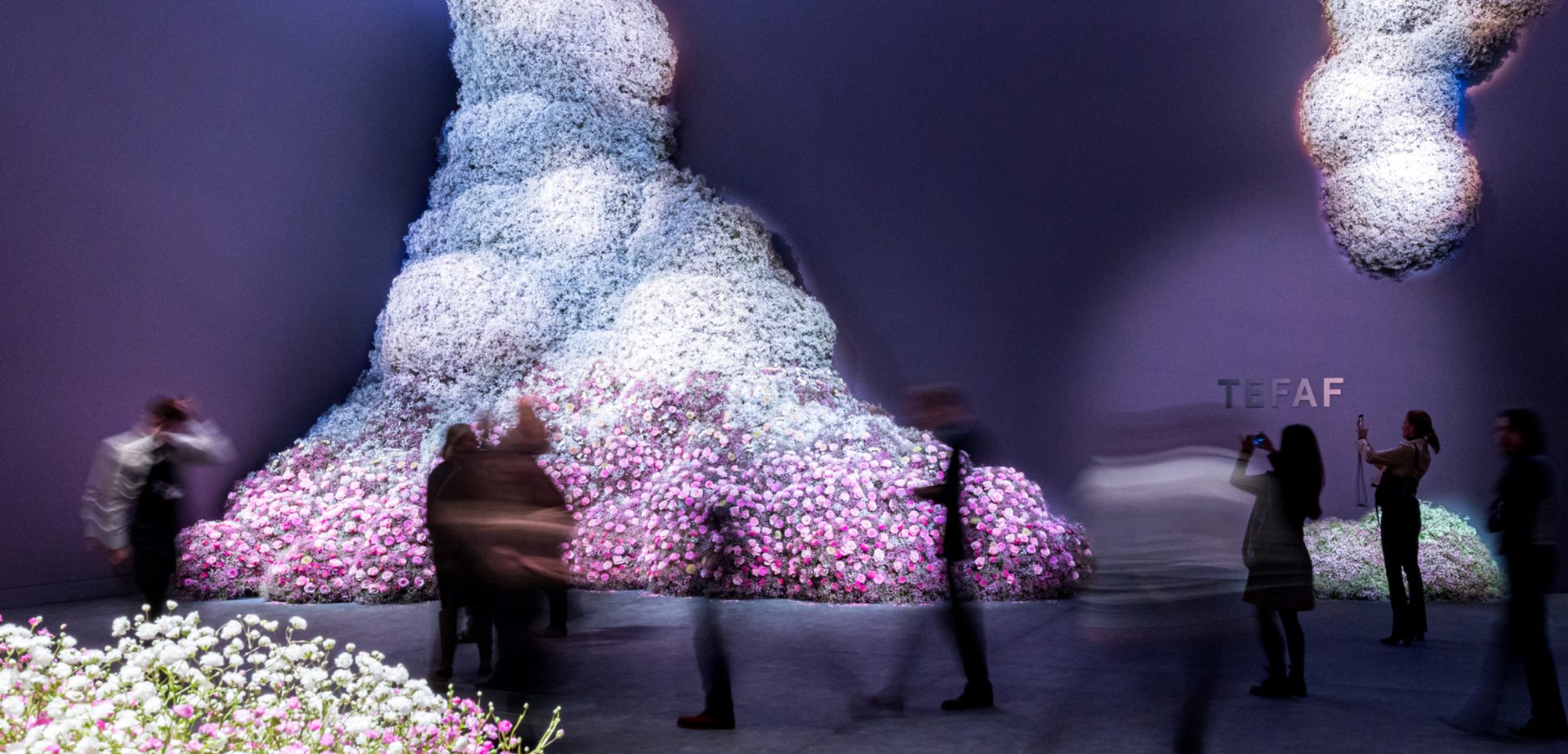
Geopolitical events, combined with rising wealth creation and mobility, are profoundly influencing the global market for art and other luxury collectables, as well as the fortunes of the world’s traditional and emerging cultural hubs. Andrew Shirley sets the scene for a thought-provoking series of articles that will paint a detailed picture of the current collecting landscape.
The world is becoming more geopolitically unstable. Despite this, wealth is growing and becoming increasingly mobile.
Clearly illustrating this juxtaposition, Forbes released the 2026 edition of its eagerly anticipated World’s Billionaires List as the war between the US, Israel and Iran, which rapidly engulfed the Middle East and sent energy costs spiralling around the world, entered its 11th day in early March.
Not only were there 400 more people on the list, which now extends to 3,248 individuals, than the previous year, but their average wealth had jumped from US$5.3 billion to US$5.8 billion.
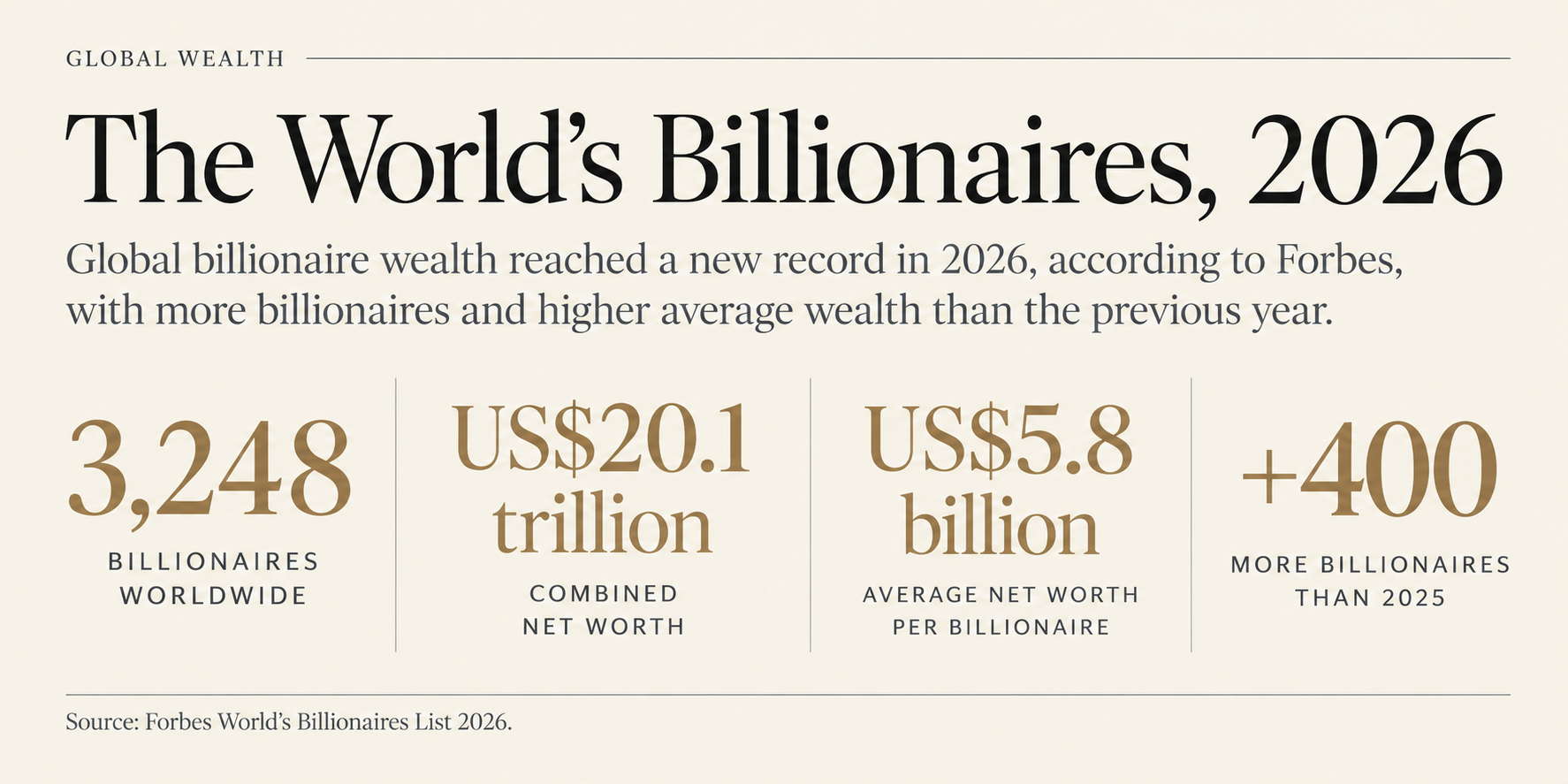
Overall, the total value of the list rose by US$4 trillion to a record US$20.1 trillion. Forbes concedes there are probably many more super-rich individuals who its wealth bloodhounds haven’t managed to track down, so even these figures don’t paint the full picture.
But how does this nexus of footloose wealth creation and geopolitics intertwine to influence global collecting markets? The answer is, at some levels, obvious, but at others it’s far more nuanced.
Footloose wealth
A key benefit of accruing great wealth is that you are no longer tethered to one domicile or even passport. If you feel your security and that of your family is under threat, you can simply move somewhere more welcoming. If you feel your tax burden is too great, another jurisdiction may reward your endeavours more favourably.
“Wealth has always been mobile. But today, we are seeing something more than the simple continuation of a long-established pattern,” writes Samuel Bosanquet, Family Office Services Director at Schroders Wealth Management.
“An era of shifting economic policies and geopolitical risk is bringing with it a super-cycle of wealth migration.”
Popularly known as ‘the great wealth migration’, this movement has captured the imagination of the media, particularly in the UK, where there seems to be a fixation with the idea of the wealthy fleeing the country’s shores for warmer and, crucially, more tax-friendly climes.
London calling?
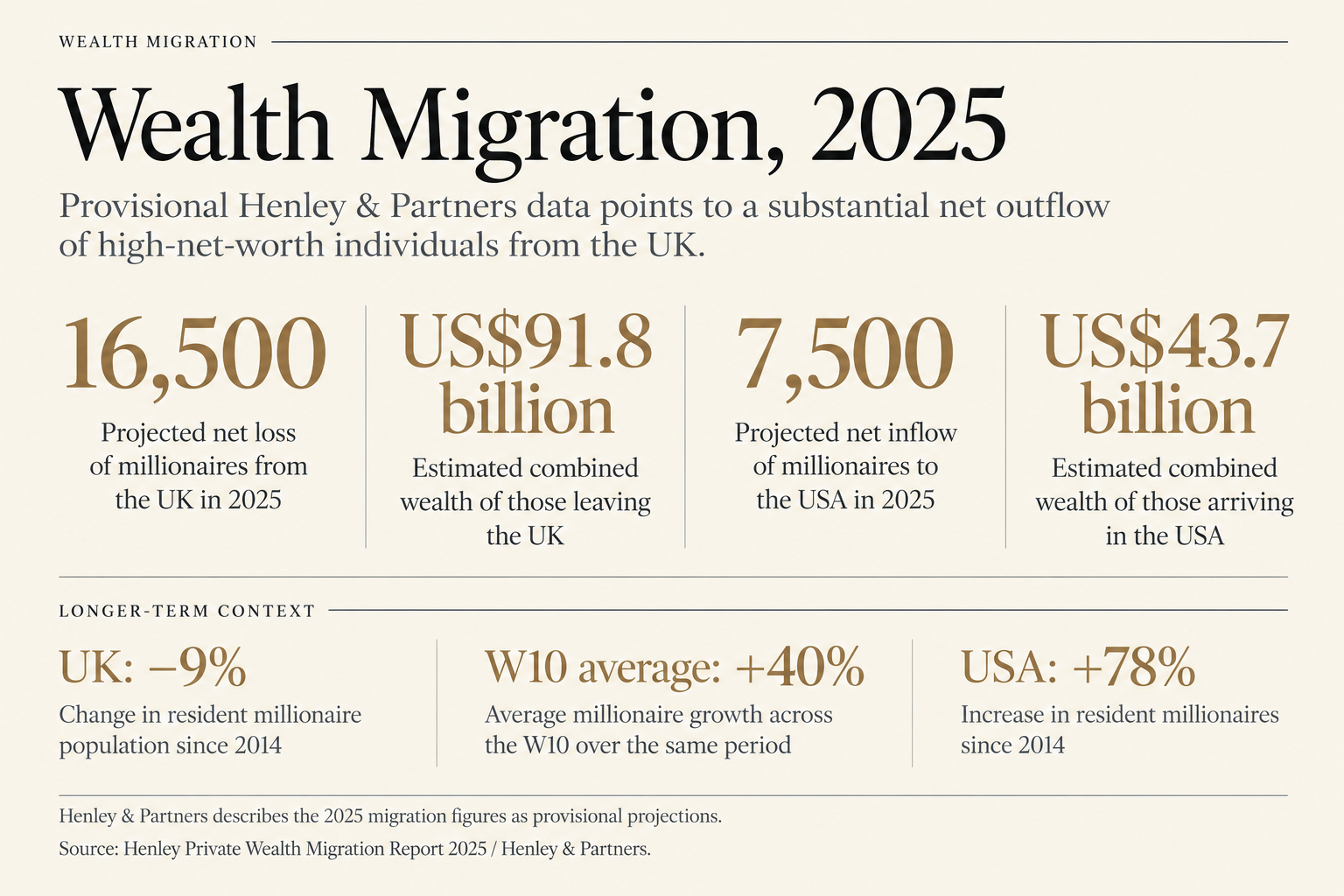
Quantifying this migration is not easy; one report suggests a combination of higher taxation levels under a Labour government and reform of the country’s non-dom tax regime is leading to an ‘exodus’ of high-net-worth individuals (HNWIs) to more supposedly wealth-friendly destinations like Italy, Switzerland and Dubai.
Numbers produced for citizenship specialist Henley & Partners claim as many as 16,500 millionaires, worth around US$92 billion, packed their bags last year, perhaps removing a valuable source of buyers from the art market.
However, despite the figures being widely quoted by the media and even politicians, some analysts have cast doubt on them.
But there is no doubt that a significant number of people are making the move. A study by the Centre for Economics and Business Research predicted around 1,200 non-doms might leave the UK, mainly due to the risk of their estates having to pay inheritance tax on their worldwide assets.
A global analysis of millionaire numbers in the 2025 edition of the UBS Global Wealth Report, based on OECD data, suggests that the population swings in some countries cannot be explained by economic contraction or expansion alone. In 2024, for example, Dubai’s millionaire cohort rose by 13,000, a jump of almost 6%.
So, what could this movement of wealth mean for art markets? The UK’s ecosystem of galleries, auction houses and consultants probably shouldn’t worry too much, not yet, at least.
Alasdair Pritchard, a partner in the Private Office of high-end real estate business Knight Frank, agrees that the wealthy have never been more mobile: “Once you reach a certain level, the world really is your oyster now. Many of my clients will have four or five homes.”
But he cautions against reading too much into the departure of some high-profile individuals. “Even if people do leave the UK for tax reasons, the really wealthy are unlikely to sell their London or country homes. They may spend less time here, but they’ll still be buying art and maintaining a lifestyle.”
Stamp duty costs mean getting back onto the higher rungs of the UK property ladder is also extremely expensive once you’ve left, even for the rich, adds Pritchard.
Will Richards, Chairman of Dreweatts, one of the UK’s leading auctioneers, confirms that he has seen little, if any, evidence of HNWI departures affecting the art market here. “It’s not something that we’ve noticed at our sales. If anything, activity has been boosted by the arrival in the UK of a growing number of HNWIs from the US.”
Madrid calling
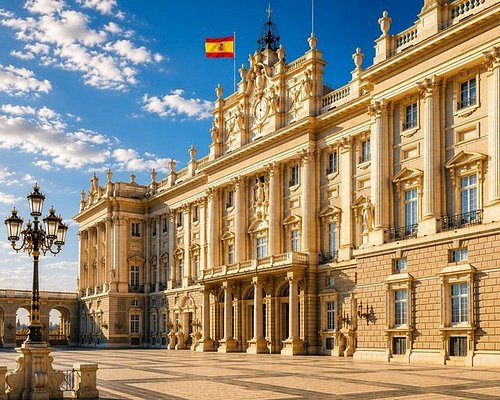
Some wealth migrations, however, do have significant impacts. Economic decline and growing political and personal risk in several Latin American countries have driven a genuine exodus of wealthy South Americans. First, to US cities, particularly Miami, but then further afield to Spanish-speaking European cultural hubs like Madrid.
Salamanca, the Spanish capital’s most expensive district, is now home to many Mexican and Venezuelan HNWIs who have played a noticeable role in reshaping Madrid’s cultural and property markets over the past decade.
Affluent families relocating capital to Spain have strengthened the city’s collector base, helping galleries and art fairs such as ARCO attract more international buyers, and boosting interest in Latin American artists. As a result, Madrid has emerged as a transatlantic hub linking European art markets with Latin American wealth.
Wealth of Nations
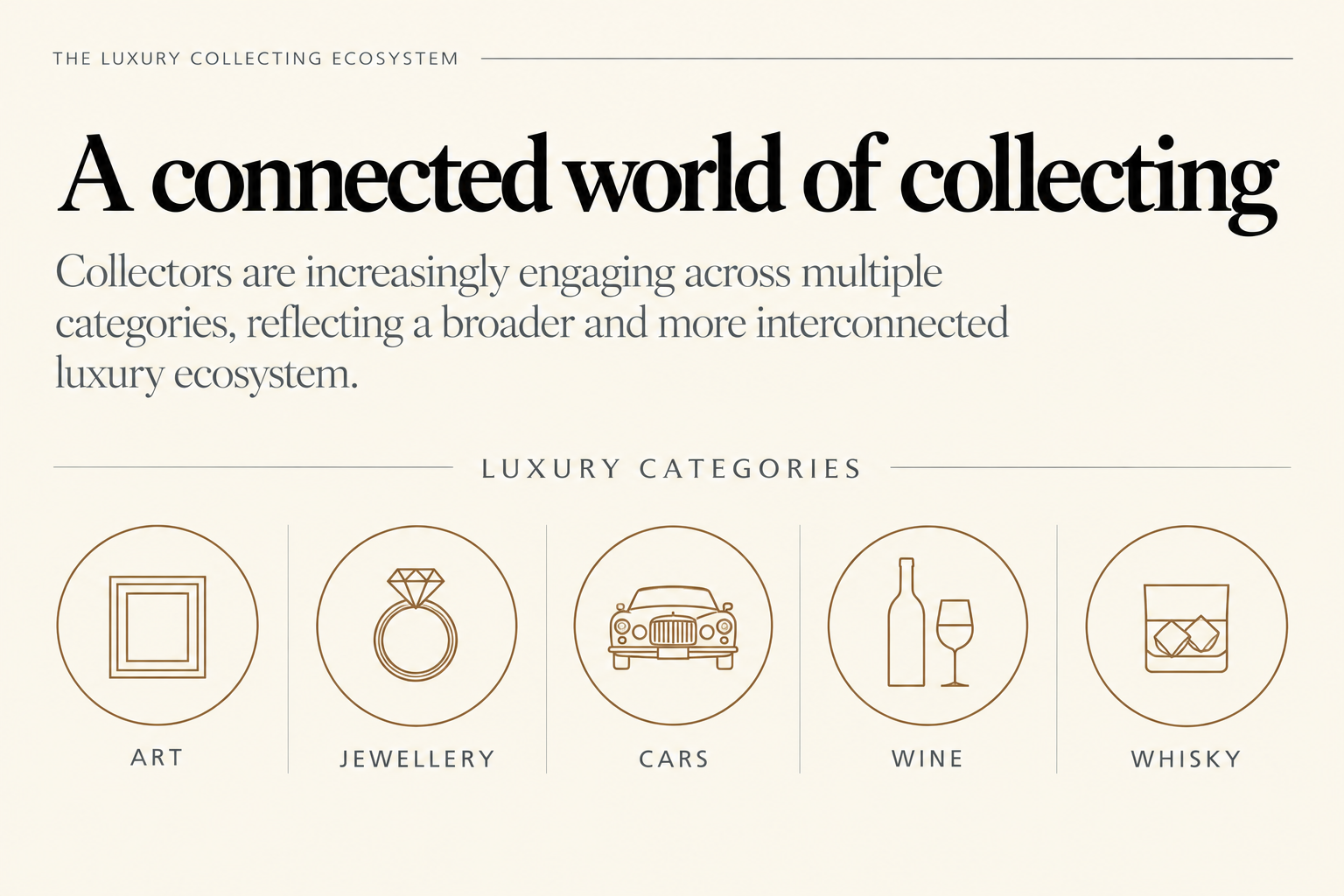
But when it comes to wealth, wherever you are living, the simplest equation is that the more of it you have, the more you can spend on art and other luxury collectables, such as classic cars, jewellery, fine wine and rare whisky.
The huge level of wealth creation that the Forbes spotlight illuminates, increasingly driven by the tech sector, has allowed individuals to drive markets and build up collections not seen since the ‘Gilded Age’ of the industrialist ‘robber barons’ like Frick, Morgan, Carnegie, and Vanderbilt.
In 2022, the US$1.6 billion auction of Microsoft co-founder Paul Allen’s art collection by Christie’s was the most valuable single-owner sale ever. In the same year, Sotheby’s sold the Macklowe collection for US$922 million. Both sales provided a valuable lifeline for the pandemic-battered auction houses.
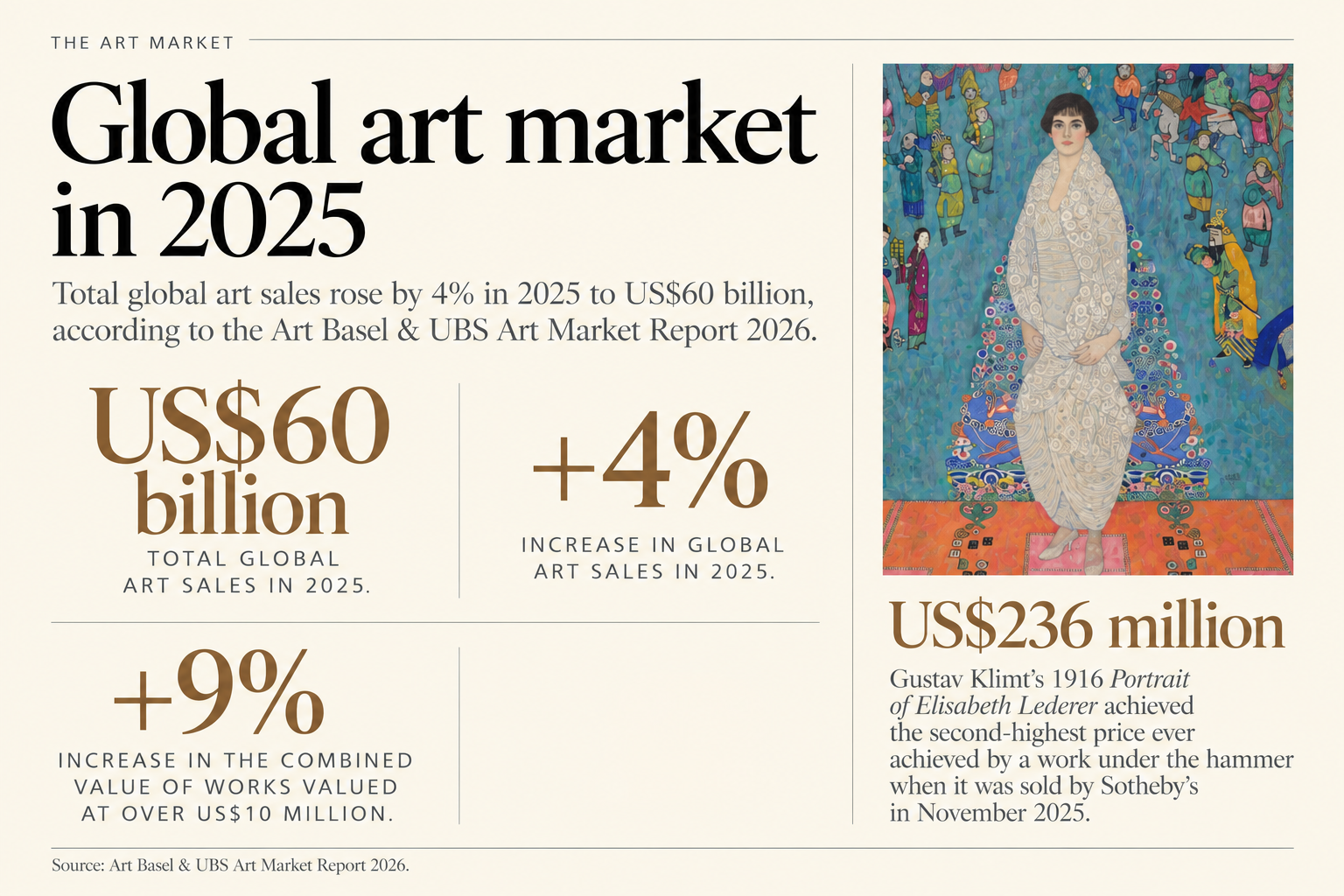
Buying activity by the super-rich also helped to nudge global art sales up by 4% in 2025 to US$60 billion, according to the Art Basel & UBS Art Market Report 2026. The biggest area of growth was for works valued at over US$10 million, the combined value of which jumped by 9%.
Illustrating the trend, Gustav Klimt’s 1916 Portrait of Elisabeth Lederer scored the second-highest price ever achieved by a work under the hammer when it was auctioned by Sotheby’s for US$236 million in November.
Coincidentally, at this year’s TEFAF event in Maastricht, London-based dealer Agnews was offering a De Ganay studio copy of the most expensive work of art, Leonardo da Vinci’s Salvator Mundi, reportedly for several million euros.
Wealth hubs
However, it is the rapid creation of new wealth hubs around the world that has driven some of the biggest shifts. With 989 billionaires, the US still has the most members of Forbes’ three-comma club, but China has accumulated an impressive 610, while India boasts a healthy 229. Overall, there are billionaires resident in an A-to-Z list of 80 countries, including even two of the world’s poorest, Afghanistan and Zimbabwe.
China’s economic growth may have slowed recently, but over the past two decades, a geopolitical shift towards more international free trade has benefited the country immensely and helped its annual GDP grow from just over $2 trillion to around $20 trillion, supercharging Chinese influence on art and other markets.
While North America boasts the world’s highest concentration of US$ millionaires – it has 43%, compared with Greater China’s 13% – Greater China dominates the US100,000toUS1 million bracket with 28% of the global total, according to the UBS Global Wealth Report. Europe accounts for 25%, while North America hosts 21%.
As a result, Hong Kong’s auction sector has been battling with London for second place behind New York in terms of the total value of annual sales. Figures from the China Art Market Report 2026, produced by Mishcon de Reya and ArtTactic, reveal that the city outshone the UK’s capital for the first time in 2020, with US1.7billionoflotsgoingunderthehammer,comparedwithUS1.6 billion in London. Since then, the lead has changed hands several times.
With many newly minted millionaires in China bringing a nationalistic bent to their collections, sale values for classic and contemporary Chinese art surged.

But other collecting classes have also benefited. The explosion in the market for rare whisky bottles – prices rose by 582% between 2008 and 2018, according to the Knight Frank Luxury Investment Index (KFLII) – was widely attributed to Chinese wine collectors moving onto a new hobby.
Eager bidding in Hong Kong’s auction rooms has also helped propel the price of designer handbags, in particular those by Hermès, into the stratosphere. The Himalaya Niloticus Crocodile versions of the iconic Birkin and Kelly bags – considered by some to be the centrepiece of any serious Hermès collection – have regularly sold for millions of Hong Kong dollars.
Looking to the future, the trend is set to continue; the 2026 edition of The Wealth Report, published by Knight Frank in April, predicts that the number of ultra-high-net-worth individuals (those worth over US$30 million) in the Asia-Pacific region is set to grow by almost 30% over the next five years.
While some have questioned whether connoisseurship is a natural bedfellow of rapidly acquired wealth, the intellectual passion of collectors from emerging markets should not be underestimated, says Will Korner, Head of Fairs at TEFAF.
“We have certainly seen sustained and meaningful engagement from collectors and institutions across Asia and the Middle East over the past decade. What is particularly noticeable is the depth of that engagement. It is not simply about attendance, but about long-term collecting, institutional acquisitions, and participation in the wider cultural ecosystem.
“For example, despite the broader global uncertainties, we were delighted to welcome the patron group from the Louvre Abu Dhabi to the fair this year, which reflects that continued commitment at the highest institutional level,” he says.
Generational Shifts
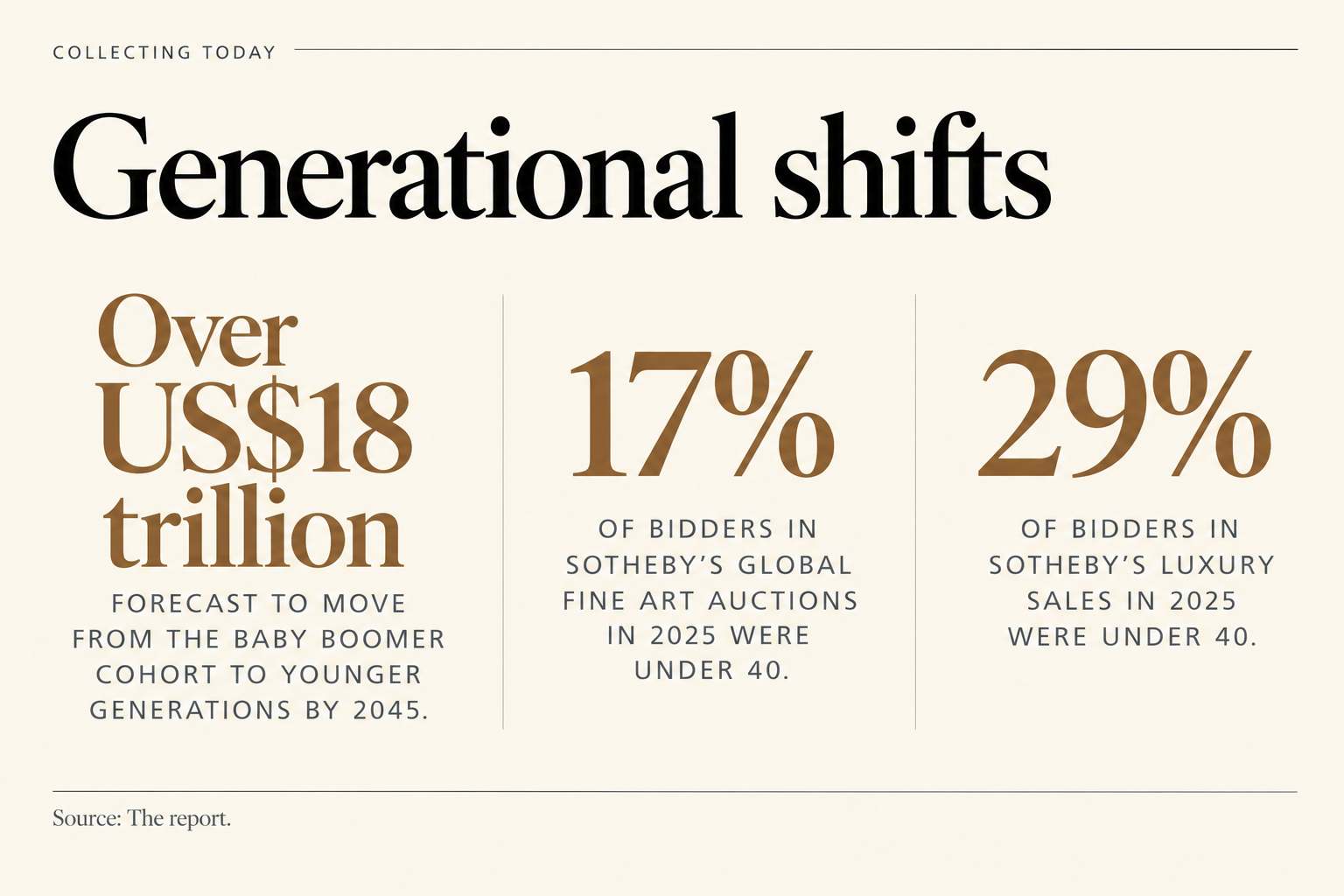
But the migration of wealth with the biggest potential to reshape collecting markets is arguably generational, not geographic. Over US$18 trillion is forecast to move from the so-called Baby Boomer cohort to younger generations by 2045 in what has been dubbed the “great wealth transfer”.
“That’s our big question,” says Richards when asked what impact it might have.
The picture is compounded by the rising number of self-made billionaires. According to Forbes, there is a record number of billionaires under the age of 30 in its latest rankings, including 22-year-old Surya Midha, the youngest-ever self-made entry to the list. Needless to say, his fortune, and that of many of his peers, was forged in the digital foundries of the tech and AI sectors.
Given that people tend to collect objects that they associate with their lives, points out Richards, the buying power of this cohort of younger collectors, whether the fortunes are inherited or self-made, has already started to influence luxury collectable markets, from classic cars to modern design. Entirely new classes of collectables have also emerged.
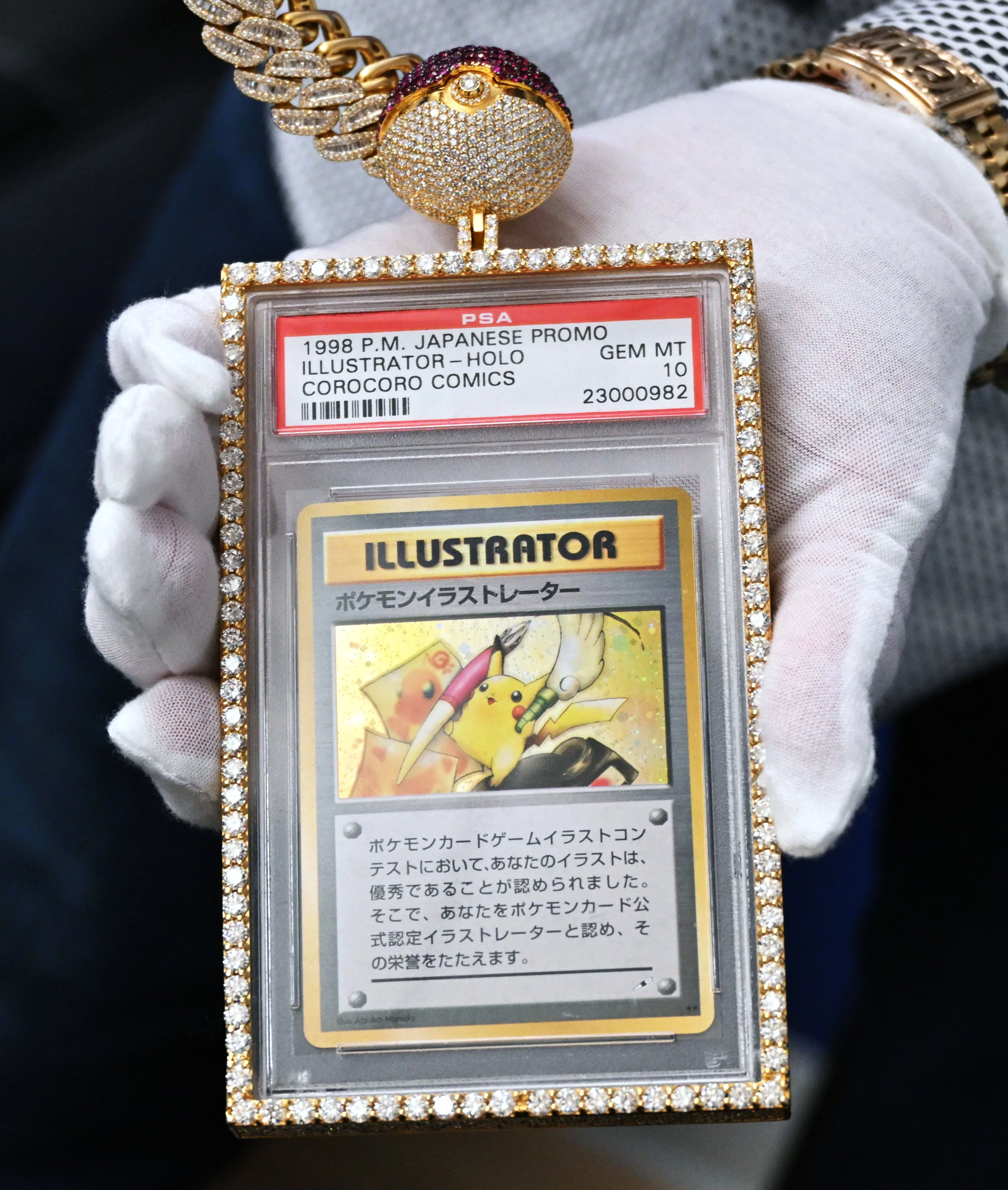
Christie’s, for example, held its first online auction of anime-focused art in March, while in February, a Pokémon Pikachu Illustrator card was reportedly sold by YouTuber Logan Paul for US$16.5 million, a world record.
But it would be wrong to assume that younger collectors eschew more traditional works of art. “Many are highly informed, globally connected, and comfortable moving across categories,” points out Korner. “Although they are often less bound by traditional hierarchies and more open to discovery, whether that is contemporary art, design, or historic works,” he notes.
Recognising this, TEFAF, arguably the world’s most important art and antiques fair, created its Emerging Collectors Programme, which highlights more accessible entry points, while maintaining the same standards of quality and vetting. “It allows collectors to begin their journey with confidence, and then expand it over time,” Korner explains.
“The next generation holds the key to the market’s future success and is already having a noticeable impact on the art and luxury collectables market,” says Harvey Cammell, Deputy Chairman of auction house Bonhams UK.
“We are seeing younger collectors embrace collecting in a more cross-category and values-driven way. Their interest extends beyond artist or brand recognition, with greater emphasis placed on provenance, craftsmanship, rarity, sustainability, and cultural relevance,” points out Cammell, who cites the watch and jewellery markets as examples.
“Premium prices being paid for unique watches by independent watchmakers like George Daniels, Roger Smith and F.P.Journe. In the world of jewellery auctions, younger collectors are attracted to highly recognisable iconic designs from Cartier and Van Cleef & Arpels, which offer collectability across price tiers, strong resale value retention, and, most importantly, can be worn and enjoyed.
“Digitally native and highly informed, this new generation is also driving the growth of online sales and global accessibility, while reshaping the market into one increasingly defined by individuality, storytelling, and emotional connection.”
A statement from auctioneer Sotheby’s also highlighted the growing importance of younger collectors. In 2025, it said those under 40 comprised 17% of the bidders in its global fine art auctions and 29% in its “luxury” sales.
The combination of wealth transfer and the growth of Gen Z wealth creation will have a profound impact on the shape and direction of collecting and, therefore, the market as a whole over the next two decades and beyond.
Nuanced shifts
Faced with headline-grabbing wealth numbers, it’s easy to overlook more subtle shifts caused by geopolitical events and cultural movements. The ripples of the political response to the Covid-19 pandemic, for example, are still being felt in the art world, even if the craze for NFTs abated as quickly as it arose.
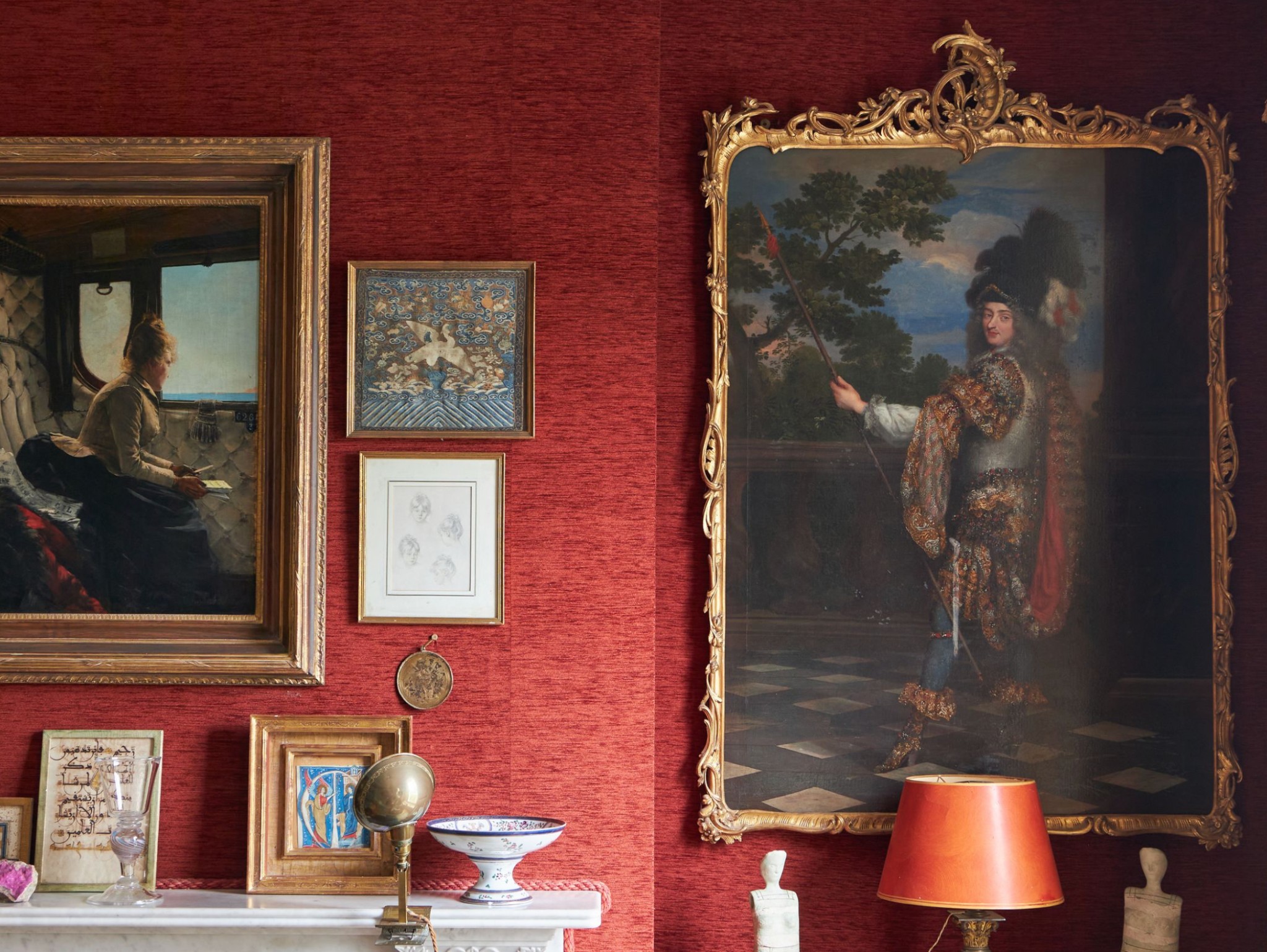
“It’s been really interesting to watch,” says Richards. “As people spent more time at home, there was a change in taste away from the harsh minimalism of the contemporary collectors towards a more mixed approach. They are buying more traditional art and more traditional antiques, like romantic portraiture and oak and early walnut furniture.”
Sometimes the impacts can be unexpected. Economic uncertainty saw the prices of not just gold, a traditional safe-haven asset, but also silver spiral to new highs earlier this year.
Owners rushing to sell silver tea services and other no-longer fashionable objects for their scrap value have cashed in to such an extent that some experts are worried about losing part of the UK’s cultural heritage.
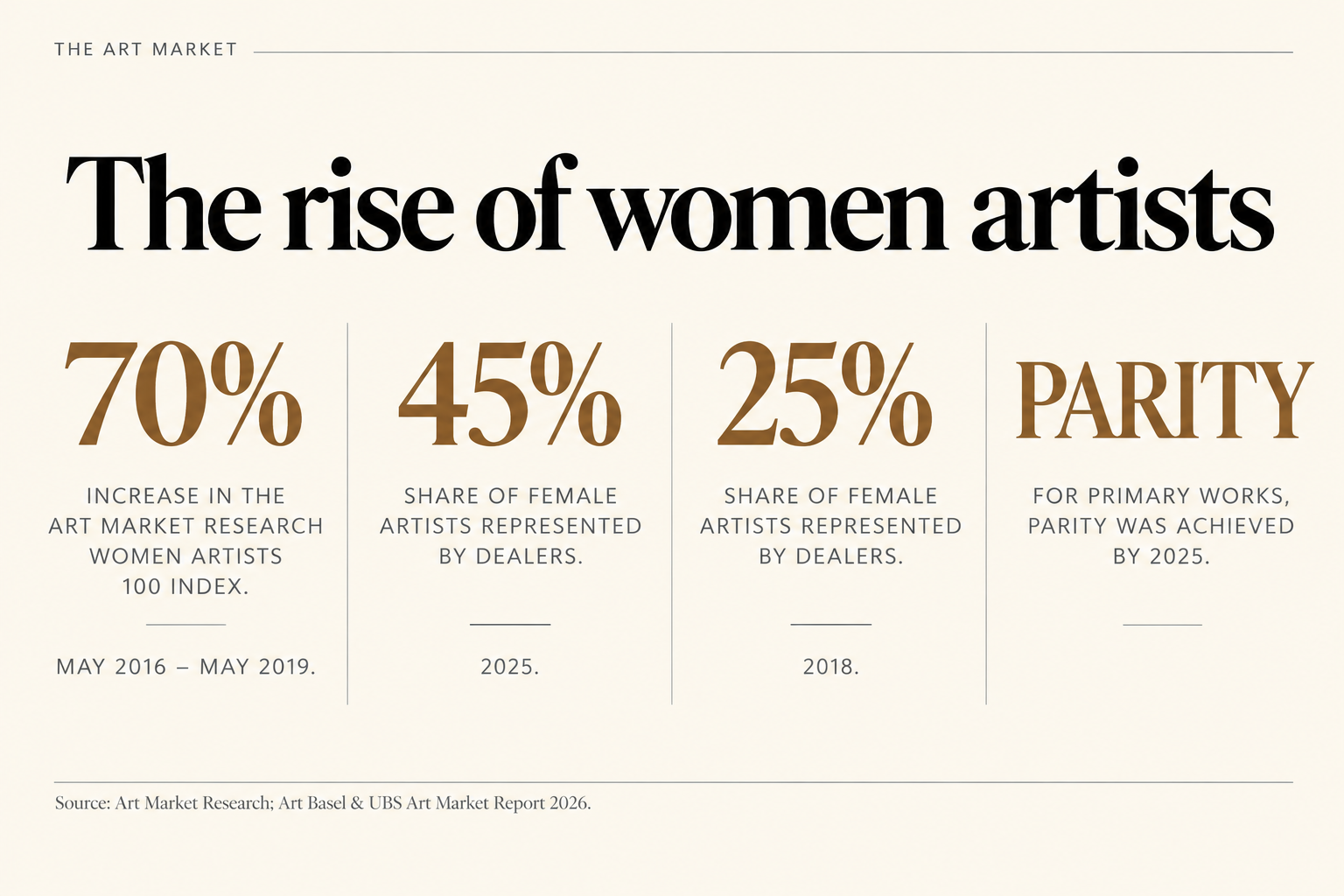
Some trends take a long time to unwind, but when they do, they can be profound. It would be wrong to attribute the recent market outperformance of black and female artists solely to the #MeToo and #BLM movements that emerged from the US, but it would be hard to argue that they didn’t help focus the spotlight more tightly on unjustifiably ignored artists.
According to Art Market Research, which tracks the performance of a wide range of luxury collectables, its Women Artists 100 Index rose 70% between May 2016 and May 2019, coinciding with the height of the #MeToo movement.
By 2025, notes the Art Basel & UBS report, the share of female artists represented by dealers rose to 45%, compared with 25% in 2018. For primary works, parity was achieved.
Other geopolitical events that have affected art markets include Russia’s 2022 invasion of Ukraine. The war has created a resurgence of interest in Ukrainian artists, says specialist dealer James Butterwick. Not from local HNWIs, “they are too busy supporting the war effort,” but from collectors who have seen and appreciated the exhibitions of the country’s art that have started touring the world since the beginning of the conflict.
“I held an exhibition at TEFAF this year of works by Dmitry Lebedev, a completely unknown self-taught Ukrainian symbolist who died aged 23 in 1922,” recounts Butterwick. “I can't tell you what an extraordinary reaction I had to it; it was just mind-blowing. His work is incredibly evocative, and its value has greatly increased in the West.”
Love it or loathe it, Brexit, which was driven by a Eurosceptic geopolitical mood among certain UK politicians and voters, has created a problematic and potentially damaging legacy for the UK’s art dealers and galleries.
“There's much more friction, paperwork, and cost moving things around now,” says Richards. “Private collectors and buyers can absorb it, but it’s more difficult for galleries that want to show their work at multiple fairs in Europe. The threat is more to the UK art industry and its standing in the world.”
In terms of trade barriers, President Donald Trump’s constantly evolving tariff landscape, part of his America First geopolitical stance, has also caused much uncertainty. Although fine art is not affected, other asset classes, such as classic cars, wine and whisky, and even rare metal furniture, have fallen foul of the new charges.
Trump’s original “Liberation Day” tariffs were subsequently ruled unconstitutional and, as a gesture of goodwill, he lifted all levies on Scottish whisky after the state visit of King Charles and Queen Camilla in April.
However, the president has other tariff options at his disposal, which, combined with his unpredictable nature, means the market is watching closely for further pronouncements with an underlying sense of caution. Dealers surveyed for this year’s Art Basel & UBS report have, for example, noticed a drop in their share of international buyers.
As with any asset class, uncertainty is never good at building confidence, particularly for collectable categories, such as decorative art, whose tariff status can be ambiguous.
Timescales
The timing and magnitude of the impact of geopolitical events can vary significantly, says Christine Bourron, CEO of market analyst Pi-eX.
In general, though, Bourron believes the response of auction markets is becoming increasingly delayed.
“In the fall of 2008, the global financial crisis triggered an almost immediate correction in the public auction market. Combined sales at Christie’s, Sotheby’s and Phillips fell sharply from $11.8 billion in the 12 months to September 2008 to $5.2 billion by November 2009.”
By contrast, she points out, art market responses to Brexit in June 2016 or the Russian invasion of Ukraine in February 2022 were slower and more complex. In 2022, the combined sales at the three leading auction houses continued to rise for nearly a year.
“But while headline results may initially demonstrate resilience, underlying pressures gradually emerge through declining liquidity, weakening confidence and ultimately reduced supply,” Bourron adds.
Culture shock
Returning to the Middle East, where we started, it’s too early to say if the current geopolitical turmoil will have any influence on art markets, and, if so, how long the process will take. But it’s fair to say that the huge levels of wealth accumulating in the region have already been a game-changer.
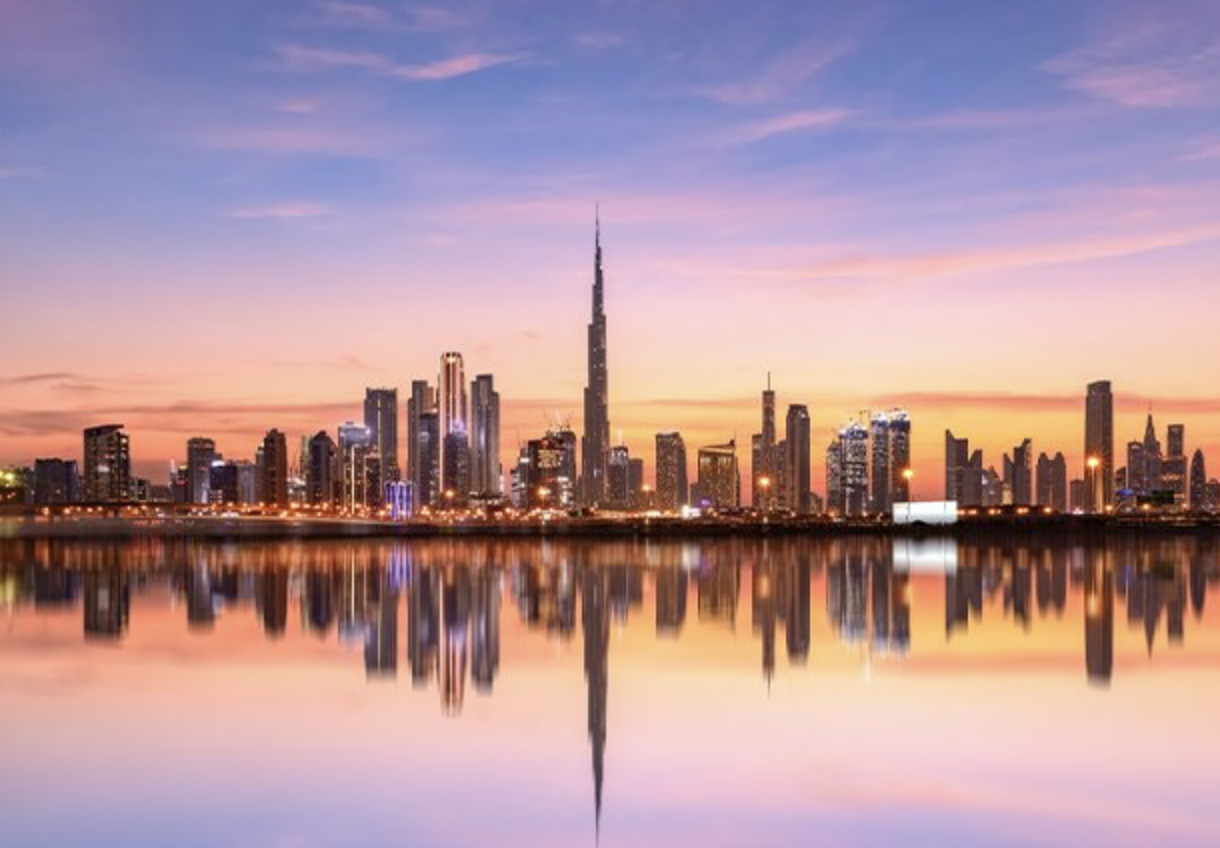
Cities like Dubai are now cultural hubs in their own right, hosting some of the world’s leading art fairs and galleries. Record-breaking sales, such as the $450 million purchase of Leonardo da Vinci’s Salvator Mundi in 2017 by Prince Badr bin Abdullah Al Saud, reportedly acting for Saudi Arabian Crown Prince Mohammed bin Salman, have also cemented the region’s market influence.
And while some journalists are already claiming that Dubai’s alluring role in the “great wealth migration” discussed earlier may have been permanently tarnished by the conflict, that seems an overly pessimistic call.
In the short term, though, agents letting out some of London’s most expensive homes have noted an upturn in demand from Gulf residents looking for a bolthole to hunker down in during the war.
A longer-term issue, depending on how the conflict plays out, could be the impact on Iran’s rich Persian cultural heritage.
“For obvious reasons, art isn’t the biggest priority when buildings are being blown to pieces and populations displaced, but a country’s artistic heritage is a crucial part of its identity,” says Korner, who, in addition to his role at TEFAF, is founder of the Cultural Heritage at Risk Database.
“Losing part of that when art is looted, or historic sites are destroyed, can be a huge blow to a country trying to rebuild itself,” Korner explains.
Future view
It’s clear that virtually every current trend, whether on public display or more nuanced, in the world of luxury collecting has been shaped by geopolitical and social changes against a backdrop of rising wealth creation and mobility.
The surging growth of AI and other tech sectors means new fortunes are still being generated at a rapid rate during an era of increasing geopolitical volatility. Against this backdrop, dealers, galleries, and auction houses need to be ready to adapt to a more fluid market.
Which assets, genres or artists are in or out of fashion, who’s buying or not buying, and where people are spending their money, attending fairs and exhibitions, and getting their advice from, could be very different over the coming years compared with the first two and a half decades of the 21st century.
The author
Andrew Shirley edited The Wealth Report, published by Knight Frank, between 2009 and 2022 and created the firm’s Luxury Investment Index. He has written extensively about the market for art and luxury collectables.
Find out more
Many of the themes covered in the article will be discussed in more detail in a series of thought-provoking articles published over the next few months. To make sure you don’t miss out, please click here to ensure you receive them directly into your inbox.


